

 English
 Türkçe
 Русский
 العربية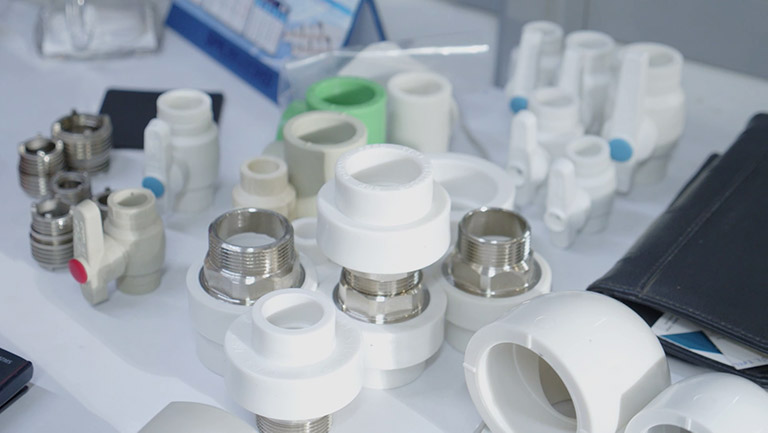
A PPR pipe schedule needs more than straight pipe lengths. Elbows change direction, tees create branches, reducers connect sizes and threaded fittings connect to suitable equipment. The right order list identifies each fitting separately.
This article uses products in the SPK PPR pipes and fittings range to help installers, importers and project buyers prepare a clear request. Product pages provide the available sizes and codes; the project specification determines which combination is appropriate.
PPR fitting types and their roles
| Type / SPK example | Purpose |
|---|---|
| 90° elbow / 45° elbow | Changes the direction of a pipe run. |
| Tee / unequal tee | Creates a branch from the main run. |
| Reducer | Connects different pipe sizes. |
| Female threaded elbow / male threaded elbow | Provides a transition between a PPR connection and a threaded connection. |
| Separable joint, female / male | Provides a joint arrangement for equipment or service access. |
| Closing cap | Closes the end of a pipe run. |
| Ball valve | Provides flow isolation within the specified system. |
Four checks before choosing fittings
1. Keep pipe and thread dimensions separate
A threaded transition has two different interfaces. Record the pipe connection dimension and the thread dimension in separate fields, with male or female clearly stated. Do not convert a pipe outside diameter directly into an assumed thread size.
Use the PPR pipe sizes and dimensions guide alongside the individual fitting table. When replacing an existing part, identify its specification and mating connection before ordering.
2. Check the complete operating conditions
Provide the intended fluid, operating temperature, design pressure and installation conditions. A pipe’s PN marking alone does not establish the operating limit of the whole assembly at every temperature. Check the pressure, temperature and service-life guidance and request confirmation for the selected products.
3. Confirm the connection and installation method
Match each fitting to the system design and the manufacturer’s installation instructions. Reinforced pipes and threaded transitions can require different preparation steps; follow the instructions for the specific product and equipment.
See the PPR welding guide for the installation workflow. A similar appearance or nominal size does not, by itself, establish compatibility between different manufacturers’ products.
4. Ask for the documents your project needs
Review the SPK product certificates, including their product scope and validity. Tell us which documents the destination market or project requires; confirm the scope for the exact pipe and fitting series before final approval.