

 English
 Türkçe
 Русский
 العربية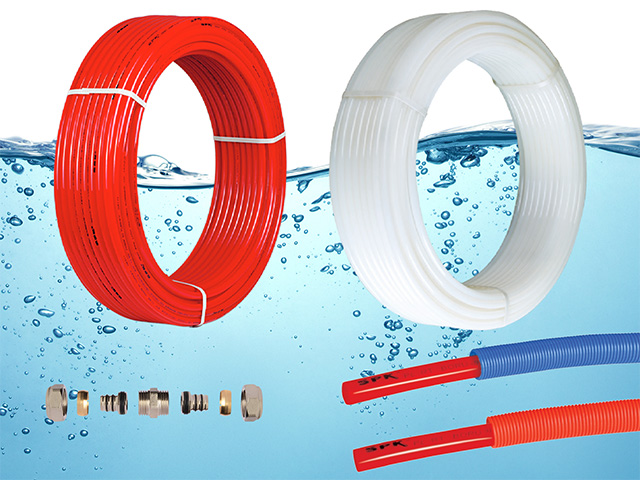
Oxygen-barrier PE-RT pipe contains an EVOH barrier layer designed to limit oxygen permeation into a closed-loop heating system. The barrier requirement should be checked carefully in underfloor heating projects that contain pumps, boilers, manifolds and other metallic components.
What does an oxygen barrier do in PE-RT pipe?
Oxygen entering through a plastic pipe wall can increase the corrosion risk for ferrous components in a closed circuit. The EVOH layer helps limit this permeation. If a project specification refers to DIN 4726 or another oxygen-permeability criterion, request the current product data sheet and applicable conformity documents.
Standard PE-RT vs 5-layer oxygen-barrier PE-RT
| Option | Main feature | What to verify |
|---|---|---|
| Standard PE-RT | Flexible pipe for heating and warm-water applications | Whether the project requires an oxygen barrier |
| 5-layer oxygen-barrier PE-RT | Multilayer construction with an EVOH barrier | Required standard, system components and application class |
| PE-RT with conduit | Spiral conduit for mechanical protection and routing | Whether conduit and oxygen barrier are each specified |
Underfloor heating pipe selection checklist
- Pipe dimension and wall thickness
- Design temperature and operating pressure
- Oxygen-barrier requirement
- Loop length, pipe spacing and hydraulic calculation
- Compatibility with the manifold and connection fittings
- Pressure test and installation procedure before screed
- Required standard, certification, packaging and total length
Loop length and pipe spacing are not fixed product values. They must be determined by a qualified designer from the heat-loss calculation, floor finish and system design.
SPK PE-RT product options
- PE-RT pipe
- 5-layer PE-RT pipe with oxygen barrier
- PE-RT pipe with spiral conduit
- PE-RT pipe with oxygen barrier and spiral conduit
Send the destination country, total length, dimensions and specification through the SPK export enquiry form for product selection and a quotation.